
Car Won't Start But Has Power: What to Check First
Lights and accessories can work while a starting fault remains. Use the crank/no-crank split to choose the next useful observation.
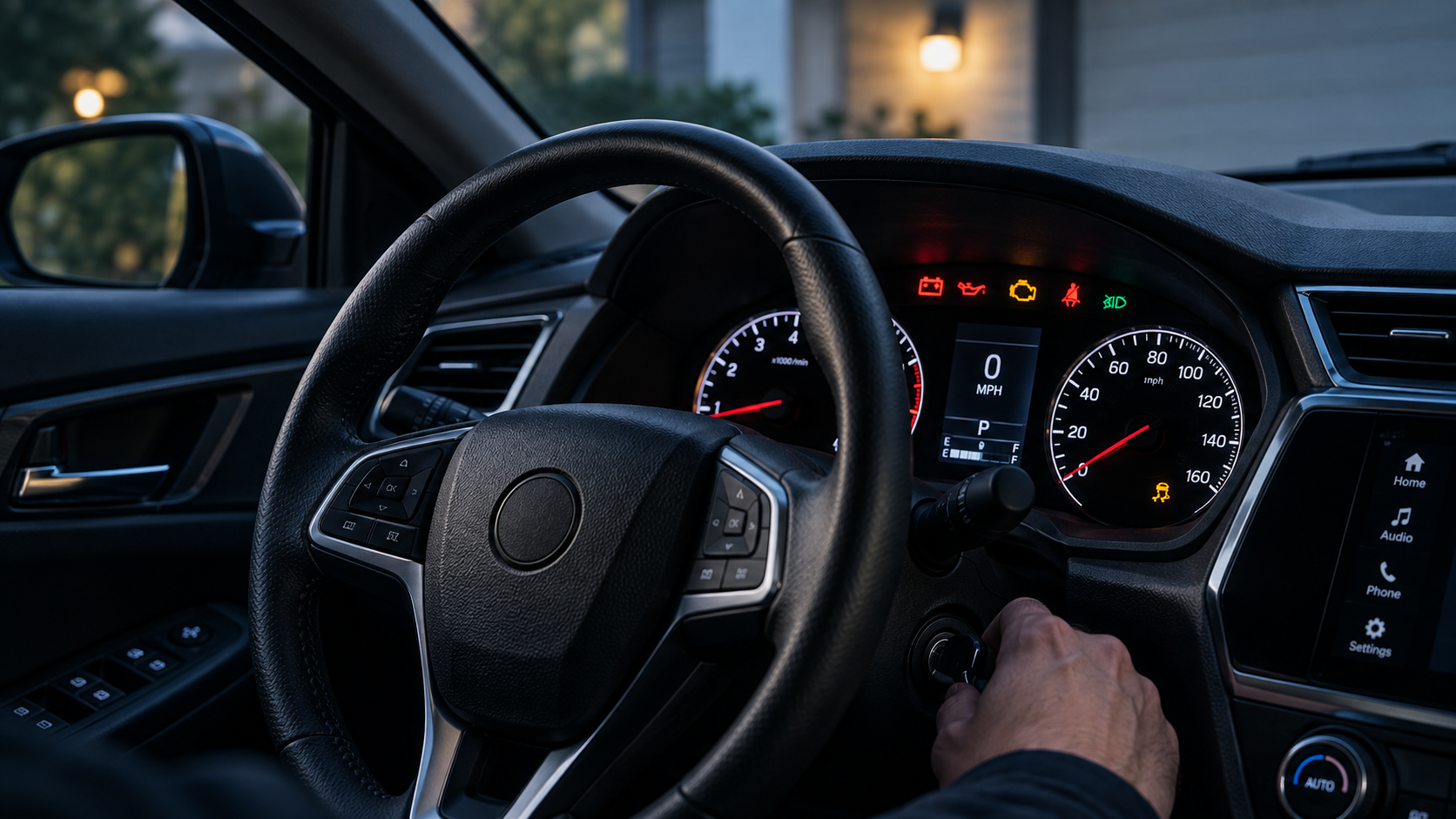
When a car has power but will not start, “power” usually means the dashboard, interior lights or infotainment system responds. That is useful context, but it does not prove the battery can support the starting circuit or that the engine-management system has everything it needs to run.
Begin with one question: does the engine crank? A quiet starter circuit is a different diagnostic path from an engine that turns normally but never catches. This distinction prevents a common mistake—choosing a replacement part before describing the symptom precisely.
What “has power” actually tells you
Low-demand accessories can work when a battery, cable or connection still cannot deliver the current required by the starter. A working screen is therefore not a complete battery-health test. A security message can also redirect the diagnosis even though the dashboard is illuminated.
If the engine does not crank
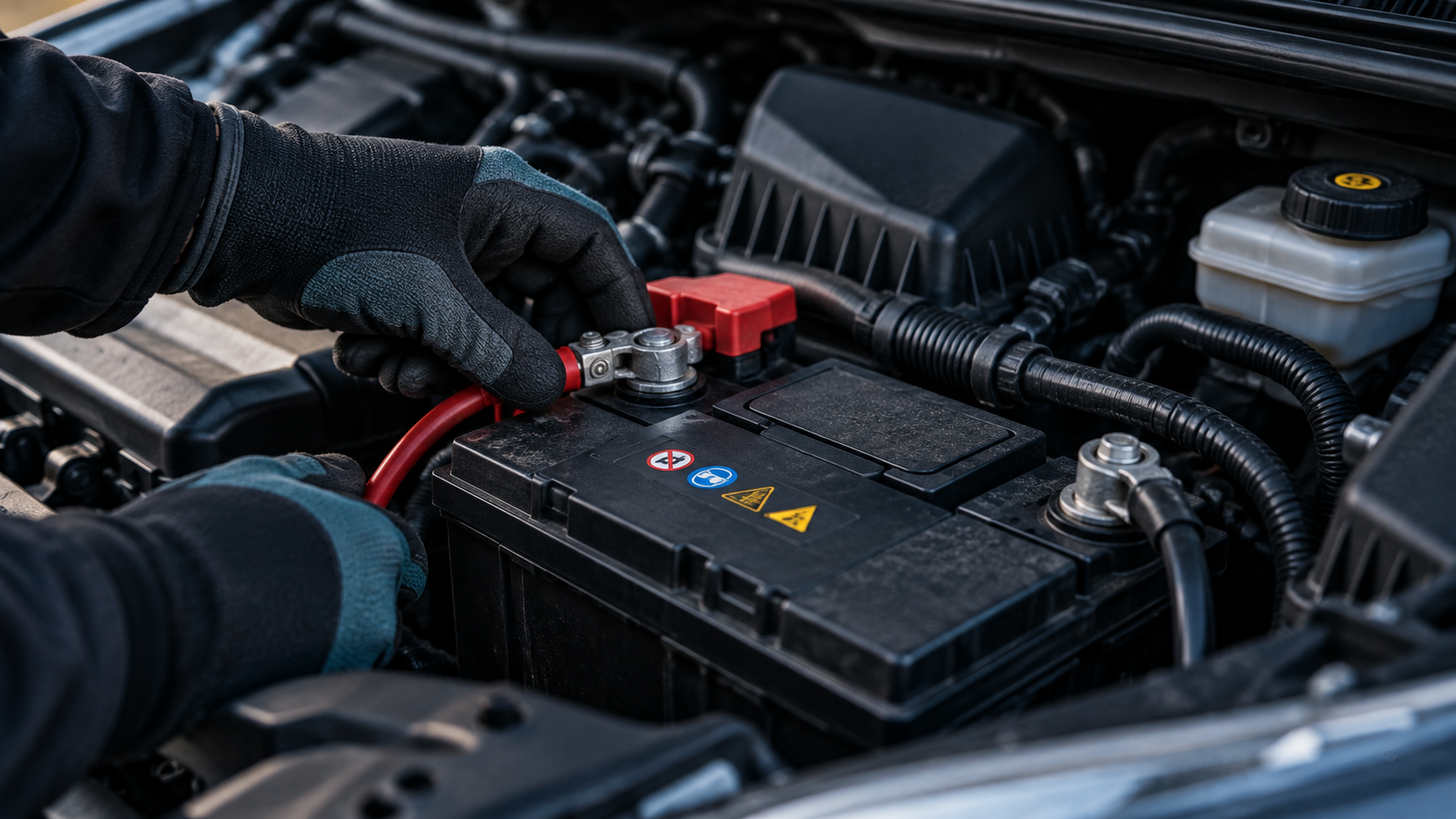
A no-crank condition means the starter is not rotating the engine. Listen for a single click, repeated clicks or silence. Look for visibly loose or damaged connections and corrosion, but treat the visual check as a clue rather than a complete electrical test.
| Observed behavior | Possible direction | What to check next |
|---|---|---|
| Single click, no crank | Battery under load, connection or starter path | Use a safe starting-circuit test; do not assume one failed part. |
| Repeated clicks | Voltage collapse, connection or control interruption | Verify battery/connection condition and the repeatable pattern. |
| No sound | Control input, key/security or main-power path | Record warnings and vehicle-specific starting conditions. |
| Lights dim sharply | High current demand or weak connection | Use a proper battery or connection test instead of a visual guess. |
If the engine cranks but will not start
When the engine rotates at a seemingly normal pace but does not run, the starter may already be doing its job. The next questions involve fuel, ignition, timing, sensor input, security authorization and scan evidence. A code can identify a monitored condition, but it does not automatically prove that the named component is defective.
Continue with the right diagnostic branch
If the symptom is a no-crank condition, continue to the guide on cranks versus no crank. If the battery repeatedly dies after sitting, use the battery-drain path instead of treating every no-start as the same fault.
Continue diagnosing
Choose the next guide that matches the symptom or evidence you observed.
Sources & editorial review
This guide provides general educational information and separates observations from diagnostic possibilities. Vehicle-specific procedures and technical claims should be checked against the applicable service information before action.